Let us learn the difference between Static site generation (SSG) and Incremental Static regeneration (ISR)
We have already seen the difference between server-side rendered and client-side rendered, still, let me summarize it for you.
While both of these suffice different use cases and have their pros and cons, if we understand them better, we see a way to optimize them.
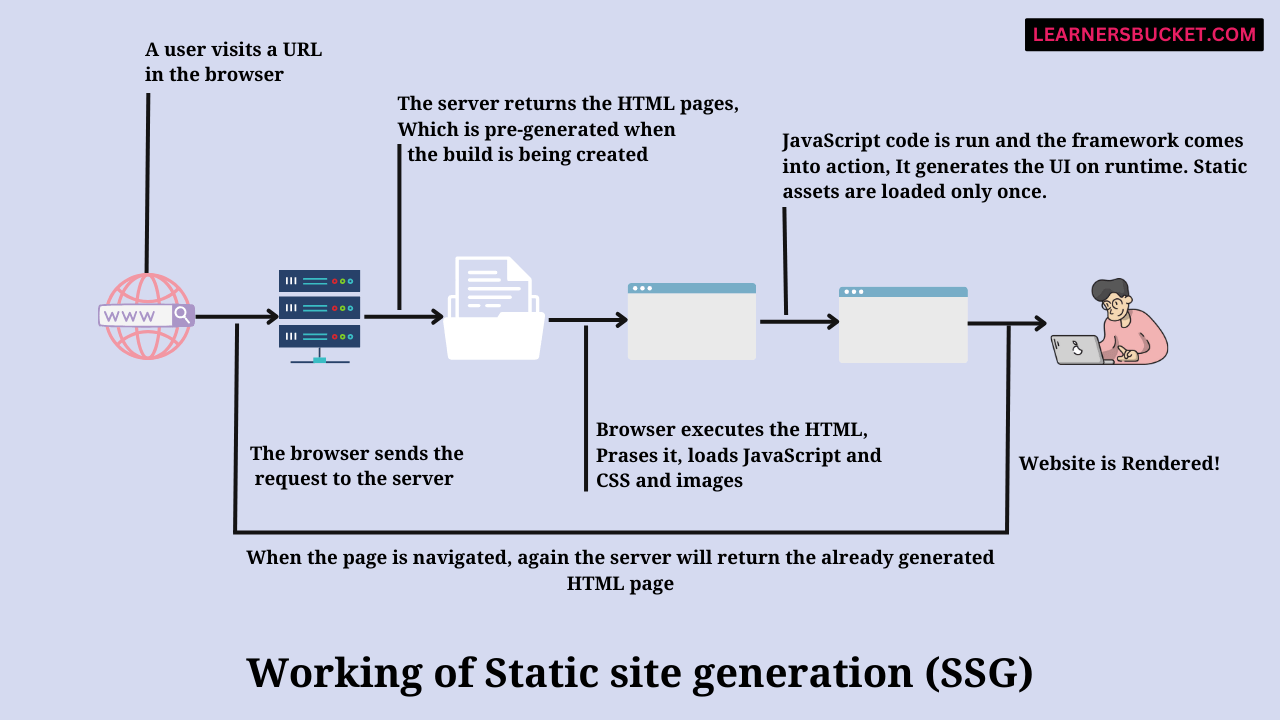
In the SSR, every time a request is made, the server generates a new HTML page, which is time and resource-consuming as re-computation would take place. What if we could generate all the HTML pages beforehand and then just serve them on request?
This would remove the need for re-computation thus we can remove the dependency of the server itself and also be faster as we are just returning pre-generated things.
Static site generation does exactly the same and the modern JavaScript frameworks like Gatsby and Nextjs provide this under the hood. All the HTML pages will be generated at the build time and then they can be served promptly.
With this we can take advantage of both SSR as HTML is pre-generated thus SEO won't be affected as well as CSR as HTML has to be rendered and shown in the browser.
Best suited for applications that have static content but use SEO like Blogs.
While SSG, boots the performance, it is not suitable for all the scenarios, especially when we want to have the partial dynamic content in the pages at the runtime.